
Illinois Unclaimed Money Search
The Illinois State Treasurer holds more than $5 billion in unclaimed money. These are lost funds from forgotten bank accounts, uncashed checks, old insurance policies, stock dividends, and safe deposit boxes that sat idle for years. The state keeps this unclaimed money until the right owner or their heirs come forward to claim it. You can search for unclaimed money in Illinois at no cost through the ICash database. About 1 in 4 Illinois residents have unclaimed money waiting for them, and the process to get it back takes just a few steps.
Illinois Unclaimed Money Quick Facts
How to Search Illinois Unclaimed Money
The ICash portal is the main way to find unclaimed money in Illinois. It is run by the Illinois State Treasurer and holds all records of unclaimed property turned over to the state. You can search by first name, last name, or business name. The search is free. No sign-up is needed. Visit icash.illinoistreasurer.gov to start.
The ICash portal shows the type of unclaimed money, the source, and the amount owed. If you find a match, you can file a claim right on the site. Most claims need some form of ID and proof that you are the owner. The site walks you through it step by step.
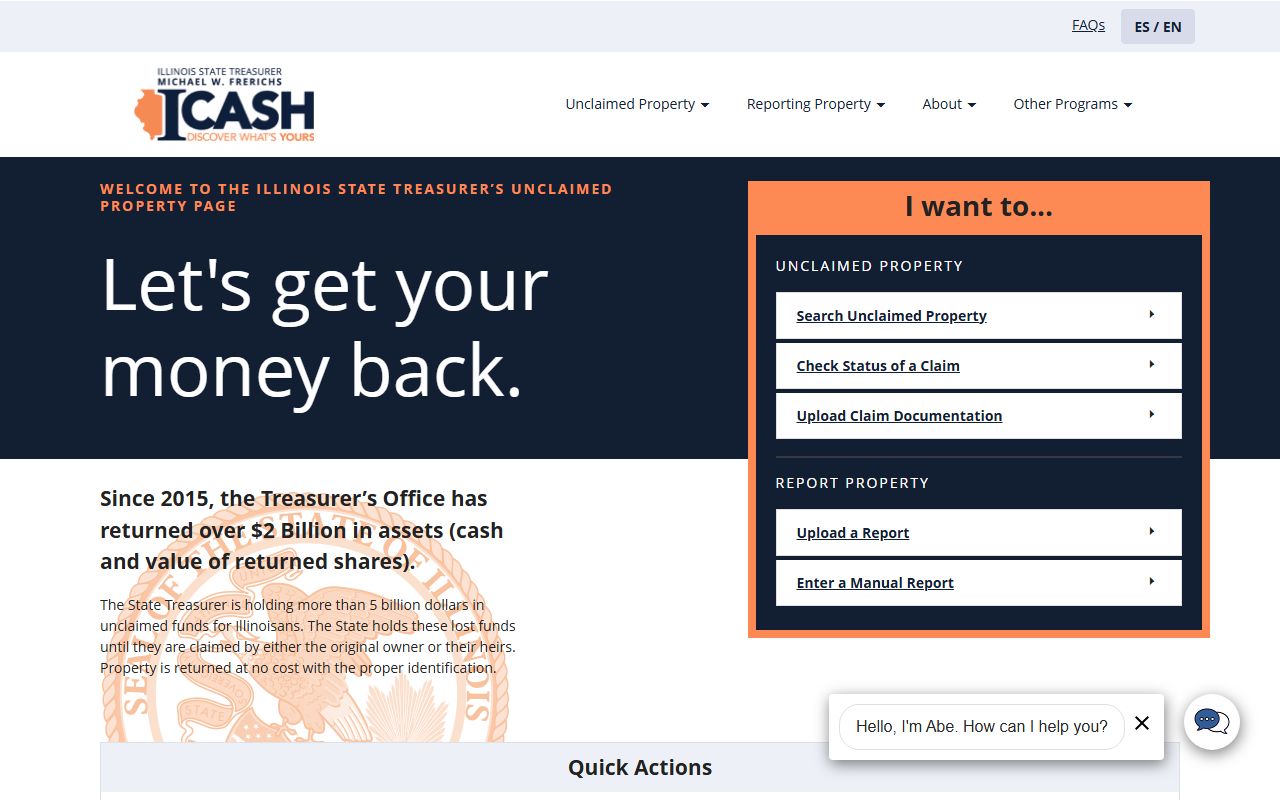
You can also check the ICash search results page to look up claims you have already filed. Enter your claim ID to see where things stand. The search tool covers all types of unclaimed money in Illinois, from small refund checks to large bank accounts.
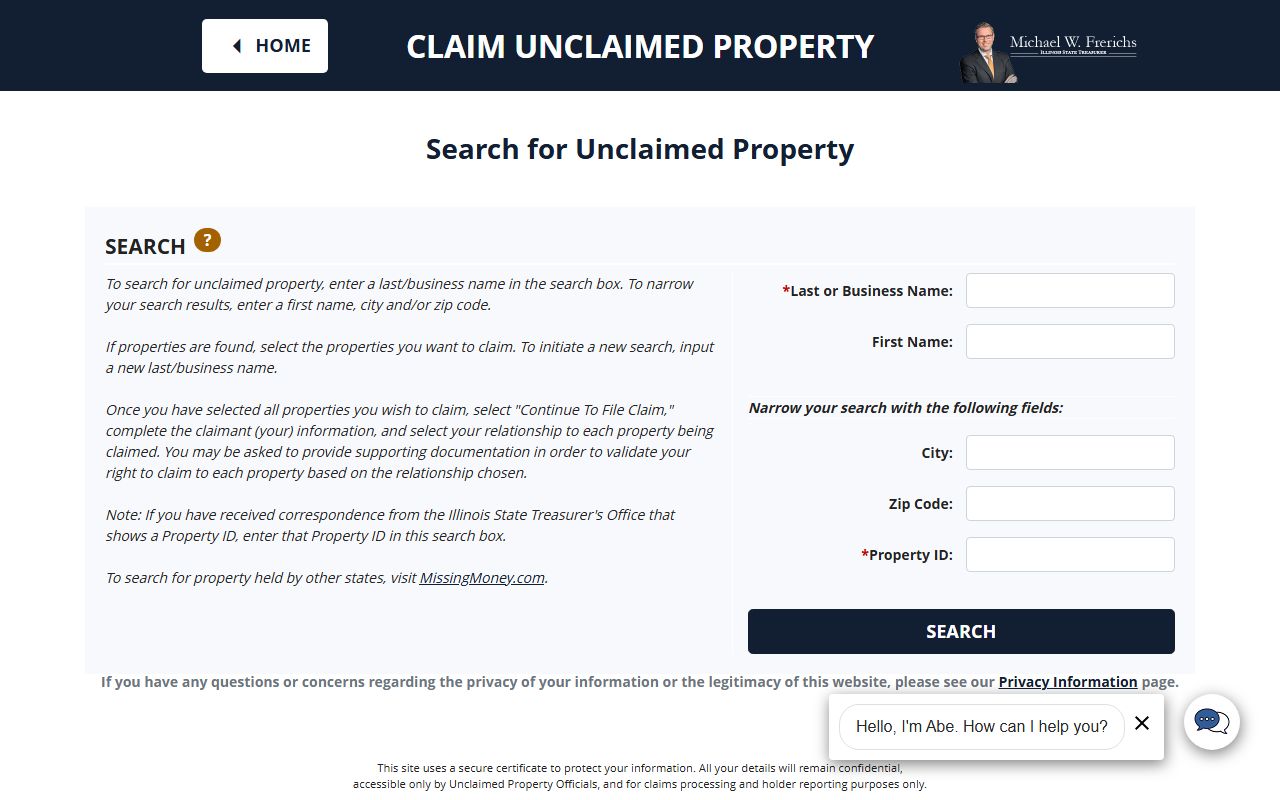
The ICash search results show each piece of unclaimed money linked to your name. You can see the source, the type of property, and the reported amount. Click on any result to start a claim right from the search page.
Illinois Unclaimed Money Match Program
Illinois Treasurer Michael Frerichs runs the Enhanced Money Match program. This is a way the state finds you instead of you having to search. The program uses the state's unclaimed money database along with records from other agencies to match owners with their lost funds. If there is a match, you get a letter in the mail. A week later, a check shows up. That simple.
"If you see a check in the mail from the state of Illinois, it's not a scam. All you have to do is open that envelope and cash that check." That quote comes straight from Treasurer Frerichs. The state has sent back more than $2 billion in unclaimed money since he took office. The Money Match program is one big reason for that number. You do not have to do anything to be part of it. The state runs the match on its own.
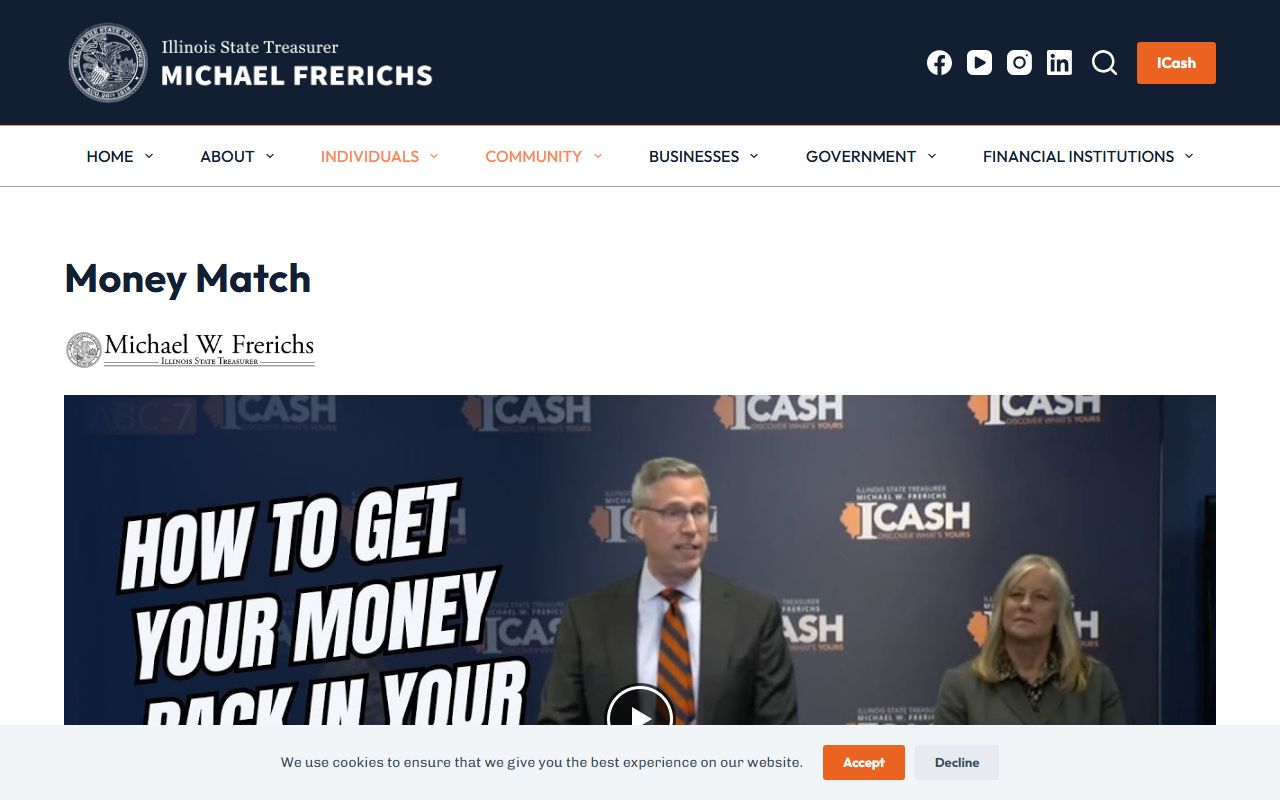
You can learn more about how the Money Match program works at the Illinois Treasurer's Money Match page. Cash the check at a bank, credit union, Walmart, or through a mobile app like PayPal. It is real money that belongs to you.
Note: The Money Match program runs on its own. You do not need to sign up or apply for it.
Types of Unclaimed Money in Illinois
Unclaimed money in Illinois comes from many sources. The most common types are forgotten bank accounts and uncashed checks. When a bank account has no activity for three to five years, the bank must turn those funds over to the Illinois State Treasurer. The same goes for checks that sit uncashed. Businesses, utilities, and insurance firms all report this unclaimed money each year.
Here are the main types of unclaimed money in Illinois:
- Forgotten bank accounts (checking, savings, CDs)
- Uncashed payroll or rebate checks
- Insurance policy payouts and annuities
- Stock dividends and mutual fund shares
- Safe deposit box contents
- Utility deposits and overpayments
- Vendor credit balances and refunds
The Illinois State Treasurer acts as custodian for all this unclaimed money. The funds do not go to the state budget. They sit in a trust until the owner or their heirs claim them. There is no time limit on when you can claim your money, but the sooner you search the better. Some items like safe deposit box contents may be sold at auction if not claimed within a set period.

Claiming Unclaimed Money in Illinois
Once you find unclaimed money on the ICash site, you need to file a claim. The steps depend on who you are and how much money is involved. The how to claim page on the ICash portal walks you through it. Most claims need just a few documents.
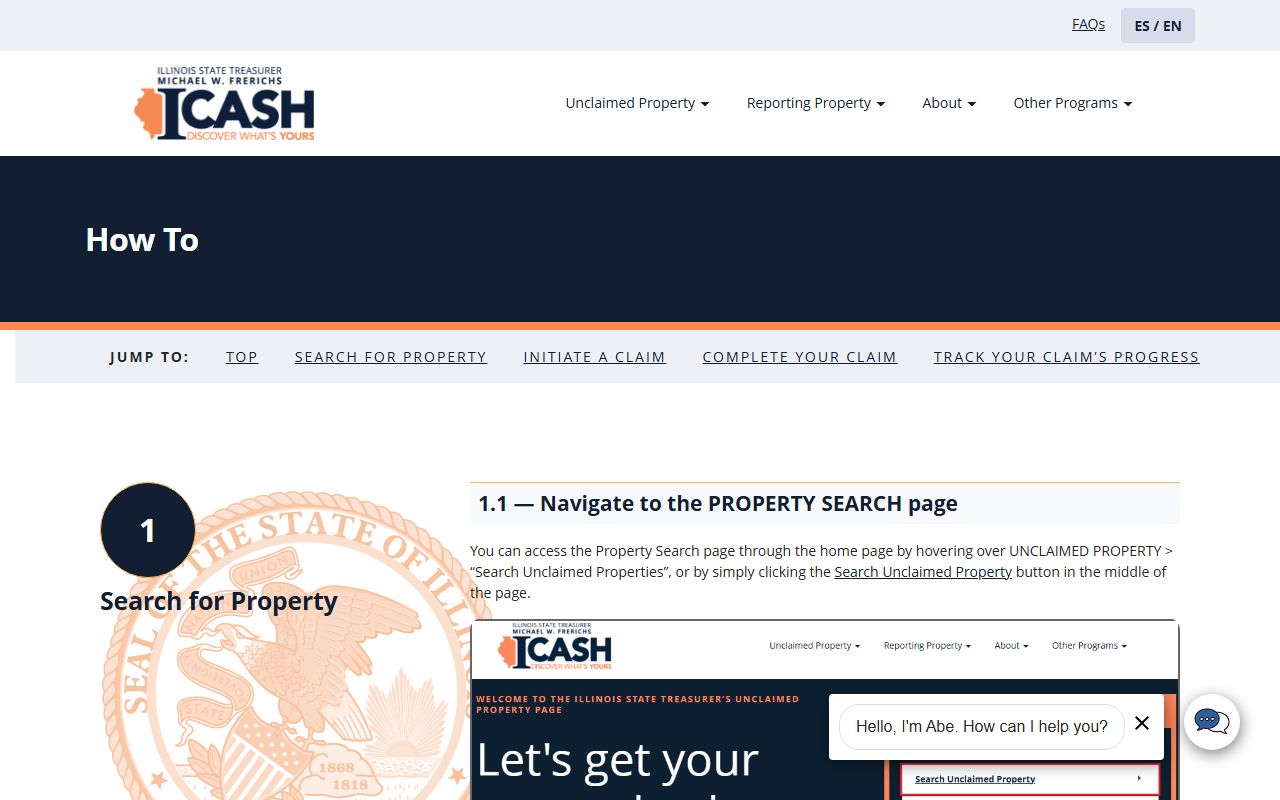
The step-by-step guide on the ICash site shows exactly what to do once you find unclaimed money in your name. Follow the instructions and gather the right documents before you start your claim.
If the name and address match what the state has on file, you need a driver's license or state ID and proof of your Social Security number. A W-2, Medicare card, or SS card works for that. Claims over $2,000 need a notarized signature. Safe deposit box claims and securities always need notarized forms too.
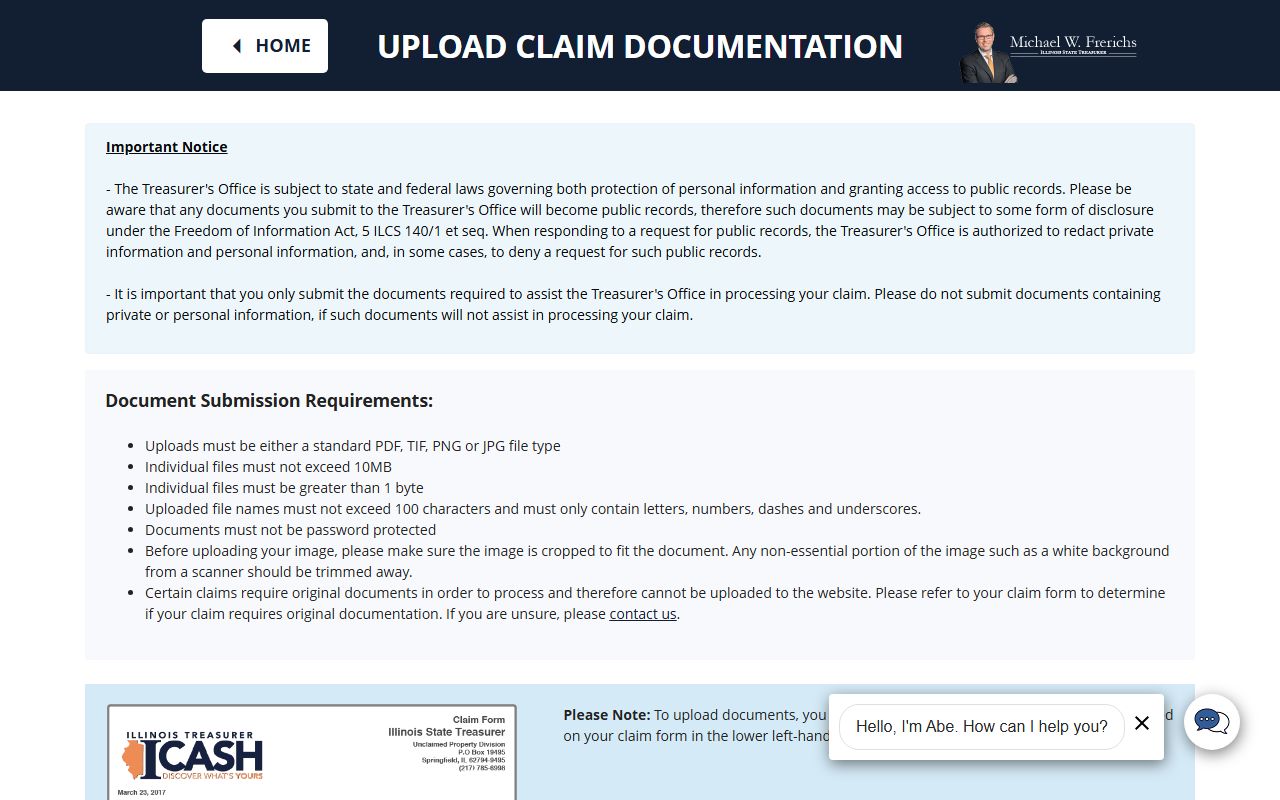
If your address has changed, you also need proof of the old address. Things like an old tax return, bank statement, utility bill, or even a postmarked envelope can work. The state accepts a long list of documents for address proof. You can email documents to unclaimedproperty@illinoistreasurer.gov, upload them through the document upload portal, or mail them to the Springfield office.
Note: All new claims may take up to 90 days for the first review, depending on the volume of claims the office receives.
Illinois Unclaimed Money Heir Claims
If the original owner has passed away, heirs can still claim unclaimed money in Illinois. These are called heir or estate claims. The documents you need depend on whether there was a will, whether probate was opened, and how much the claim is worth.
For small amounts of $250 or less, you may use a Capacity to Claim Affidavit. This is the simplest route. You need the death certificate, a completed claim form, and the affidavit. For larger heir claims with no will, you need a Small Estate Affidavit that lists all legal heirs. Fill out every section of that form. Blank sections get sent back.
When there is a will but no probate, you need a court certified copy of the will along with the death certificate and claim form. Open estates require a Tax ID for the estate and a Letter of Office dated within three years. The Treasurer's office follows Illinois probate law for all heir claims. You can review those statutes at the Illinois Compiled Statutes on Estates.
Check Your Illinois Unclaimed Money Claim
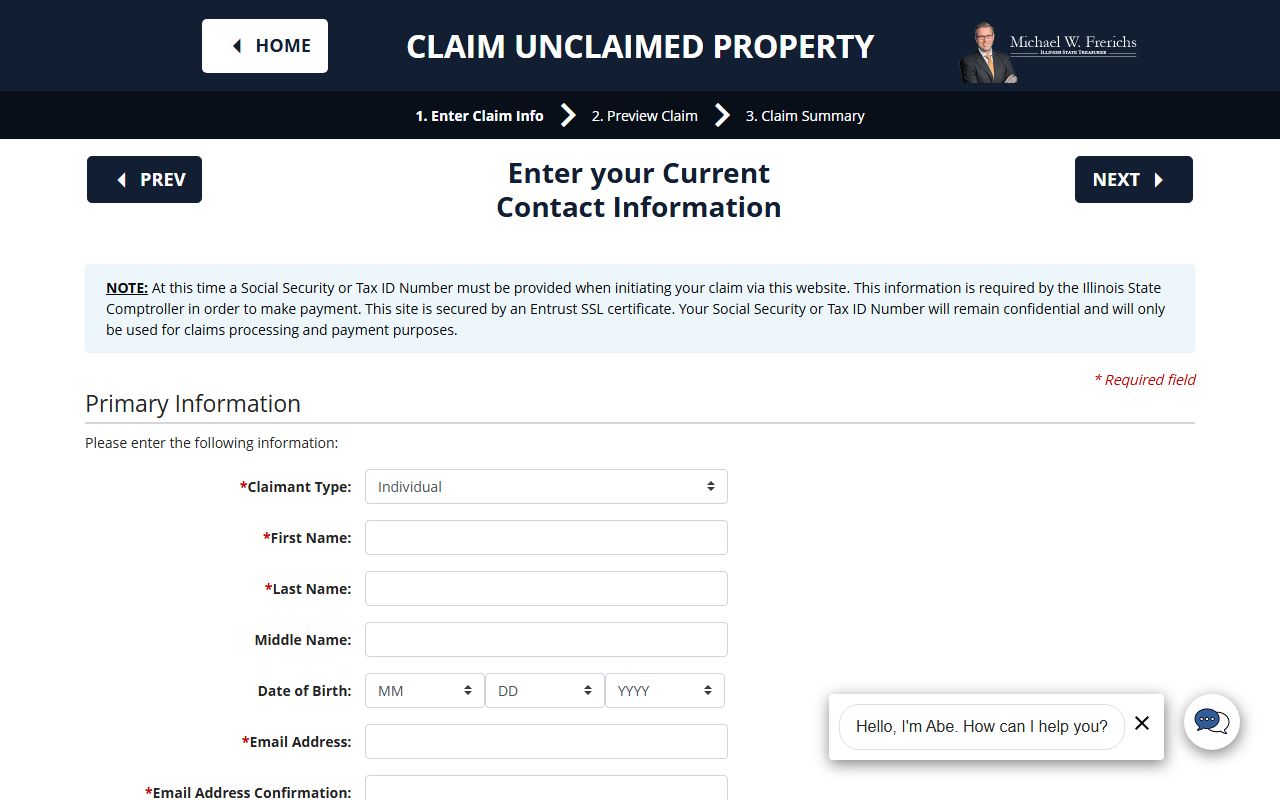
After you file a claim, you can track it on the ICash claim status page. Enter your claim ID and see where your claim stands. Processing times vary by claim type and amount. Simple claims with matching info move faster.
The first review takes up to 90 days from the date the office gets your paperwork. Some claims need more documents. If so, they send you a letter or email to let you know what else they need. Once a claim is complete with all required documents, the Treasurer must issue a decision within 90 days.
Contact Illinois Unclaimed Money Office
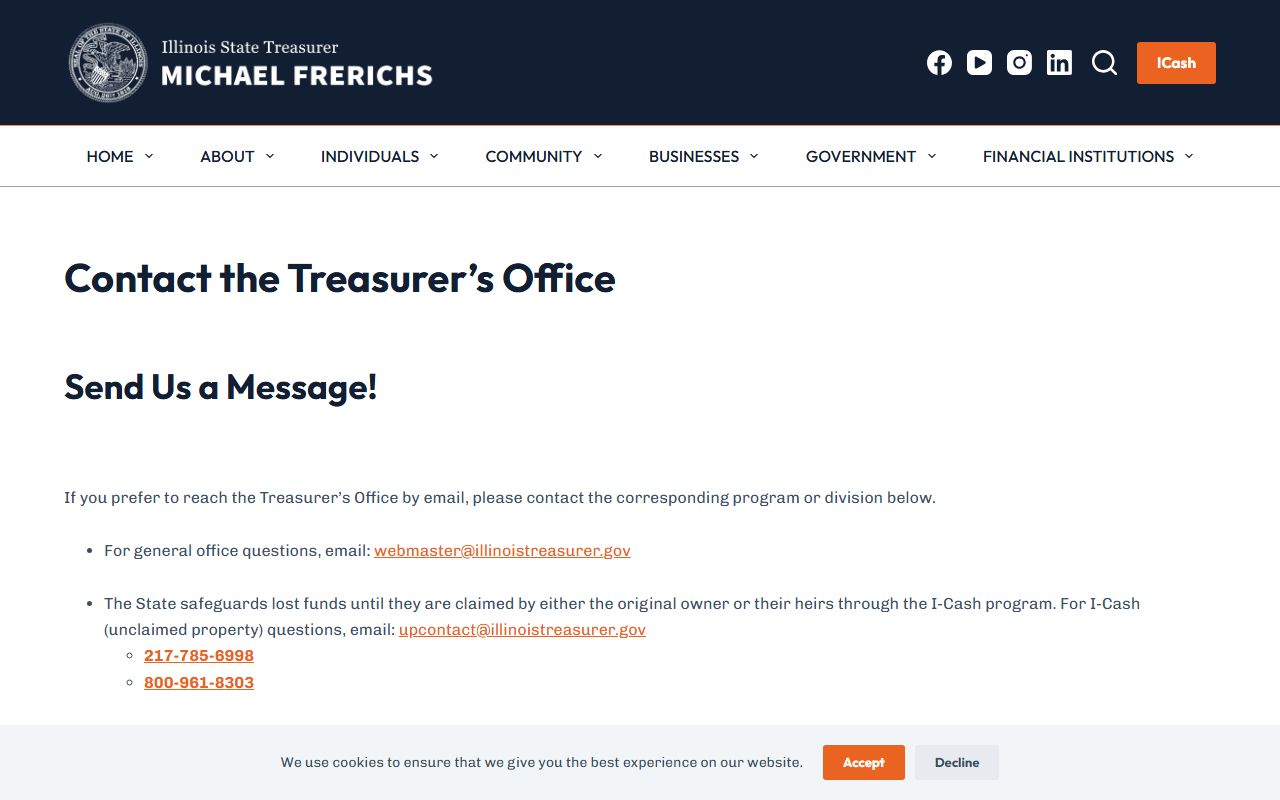
The Unclaimed Property Division has two offices. The main office is in Springfield at the Marine Bank Building, 1 East Old State Capitol Plaza, Springfield, IL 62701. Call them toll-free at 800-961-8303 or locally at 217-785-6998. The contact page has hours and more details.
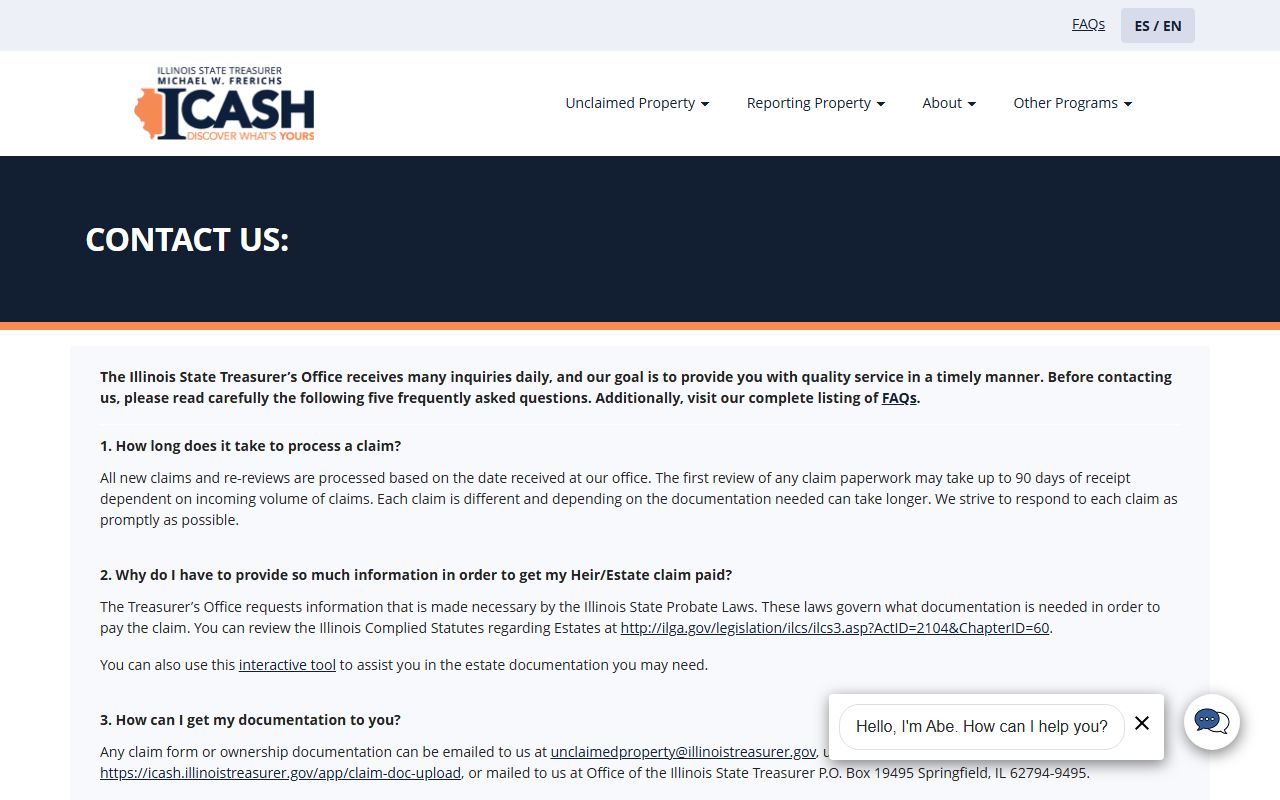
The FAQ section on the contact page covers common questions about unclaimed money claims in Illinois. It explains processing times, what documents you need, and how to handle heir claims.
The Chicago office is at 555 W. Monroe Street, 14th floor, Chicago, IL 60661. You can call 866-458-7327 to reach them. The Chicago office takes appointments, so check the website before you visit.
You can also email the office. For general unclaimed money questions, use upcontact@illinoistreasurer.gov. For claims documents, send to unclaimedproperty@illinoistreasurer.gov. Mail claims to: Office of the Illinois State Treasurer, P.O. Box 19495, Springfield, IL 62794-9495.
Illinois Unclaimed Money Laws
The Revised Uniform Unclaimed Property Act (765 ILCS 1026/) is the main law that governs unclaimed money in Illinois. The original law was passed in 1961. In 2017, the Treasurer's office worked with the General Assembly to update the law to match current best practices from the Uniform Law Commission.
Under this law, businesses must report unclaimed money each year. All business associations, utilities, and life insurance companies file by May 1. Banks, other insurance firms, and government agencies file by November 1. Even if a business holds no unclaimed money, they must file a negative report. The state can audit companies that fail to report.
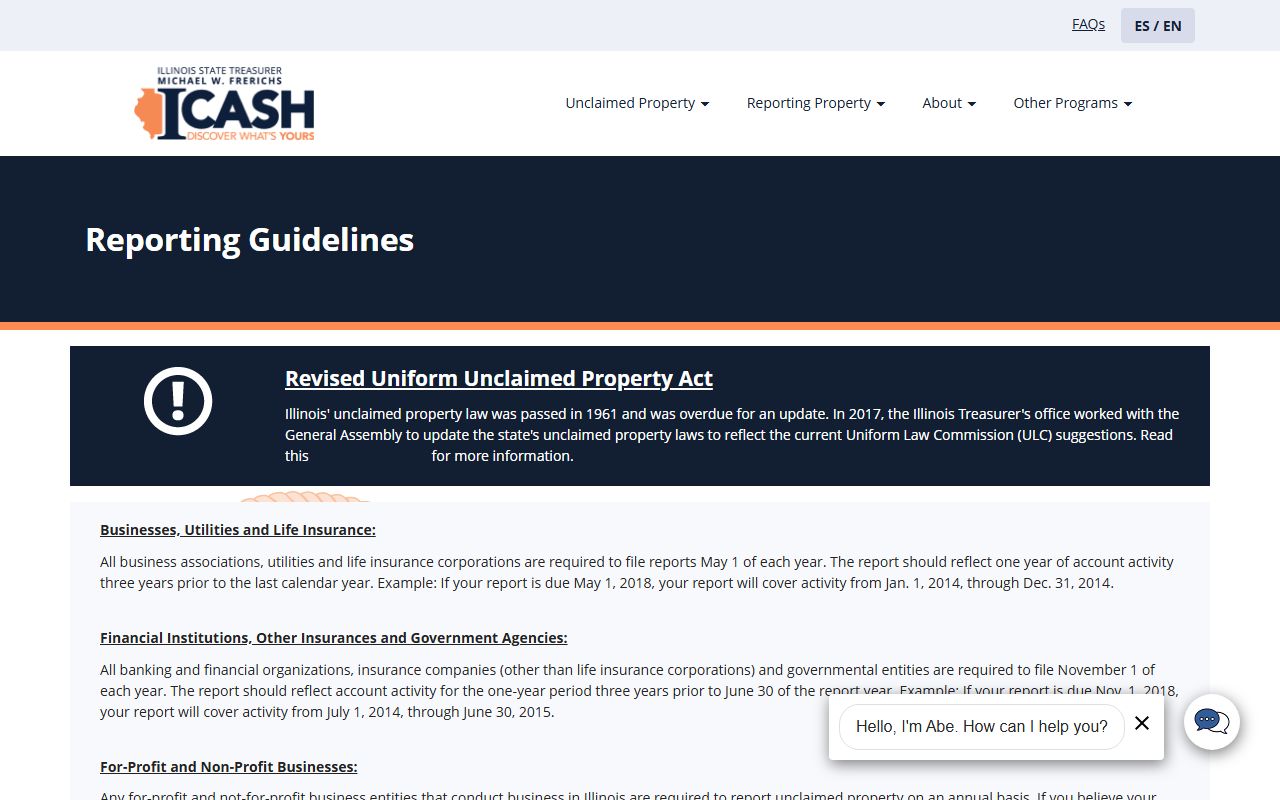
The reporting rules cover a one-year period of account activity from three years before the filing date. The reporting guidelines page has the full breakdown of deadlines and examples. Examinations happen when the Treasurer's office suspects a company did not report as required. These are done under Articles 10 and 14 of the Act.
Unclaimed Money Finders in Illinois
Some people and businesses offer to find unclaimed money for a fee. In Illinois, these finders must have a license from the State Treasurer. The rules are strict. You must be at least 21 years old, pass a criminal background check, and post a $100,000 fidelity bond. The application fee is $500 and is not refundable.
Finder fees in Illinois cannot be more than 10% of the amount collected. That is the legal cap. Any contract that charges more is void. Finder contracts are also invalid if they are signed during the first 24 months after the Treasurer receives the unclaimed money. You can always claim your unclaimed money on your own through ICash at no cost. The finder licensing page has all the rules.

Acting as a finder without a valid license is a public nuisance in Illinois. The state can seek injunctions, cease-and-desist orders, and civil penalties up to $10,000 per violation. Attorneys with a direct client relationship do not need a finder license. Licensed CPA firms that meet certain conditions are also exempt.
Illinois Unclaimed Money for Local Governments
Local governments in Illinois can have unclaimed money too. The Local Government Entity Match program helps cities, counties, school districts, and other public bodies find and claim their funds. Treasurer Frerichs pushed for this program through legislation in 2023. It puts unclaimed money back to work in local communities.
Unclaimed money for local governments includes vendor credit balances, vendor refunds, uncashed group insurance checks, and uncashed fee checks. Any sum owed to a unit of government that sits unclaimed gets turned over to the Treasurer. The claim form takes less than 15 minutes to fill out. You can reach the government outreach team at governmentoutreach@illinoistreasurer.gov or call 800-961-8303.
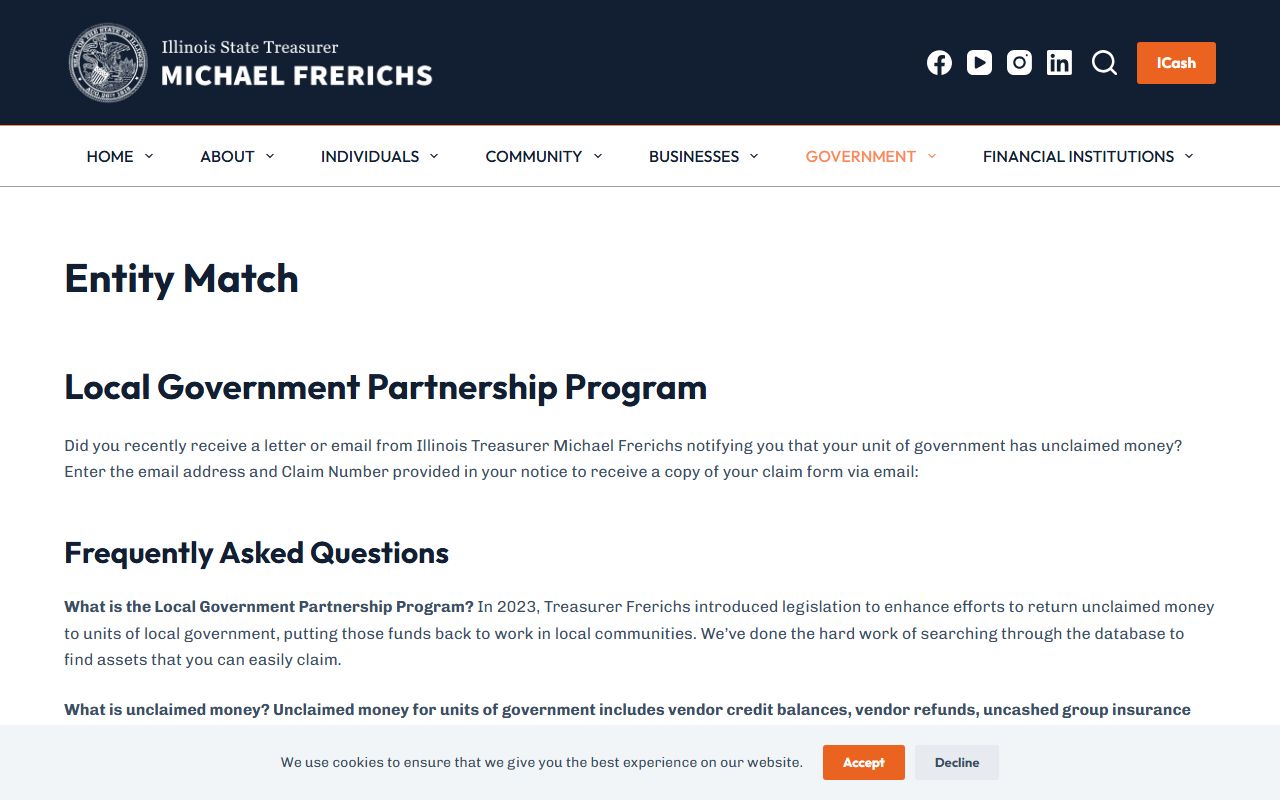
There is a deadline. If a local government does not claim its unclaimed money within 5 years, those funds transfer to the State's General Revenue Fund. The assets get posted on the Local Government Entity Match page so officials can check.
Note: Local governments are key partners in spreading the word about unclaimed money in their communities.
Illinois Unclaimed Money Self-Audit
Businesses that think they may have unreported unclaimed money can use the self-audit portal. This is run through Kroll Government Solutions, an authorized third-party auditor. The self-audit lets companies review their own records and report what they owe before the state has to come looking.
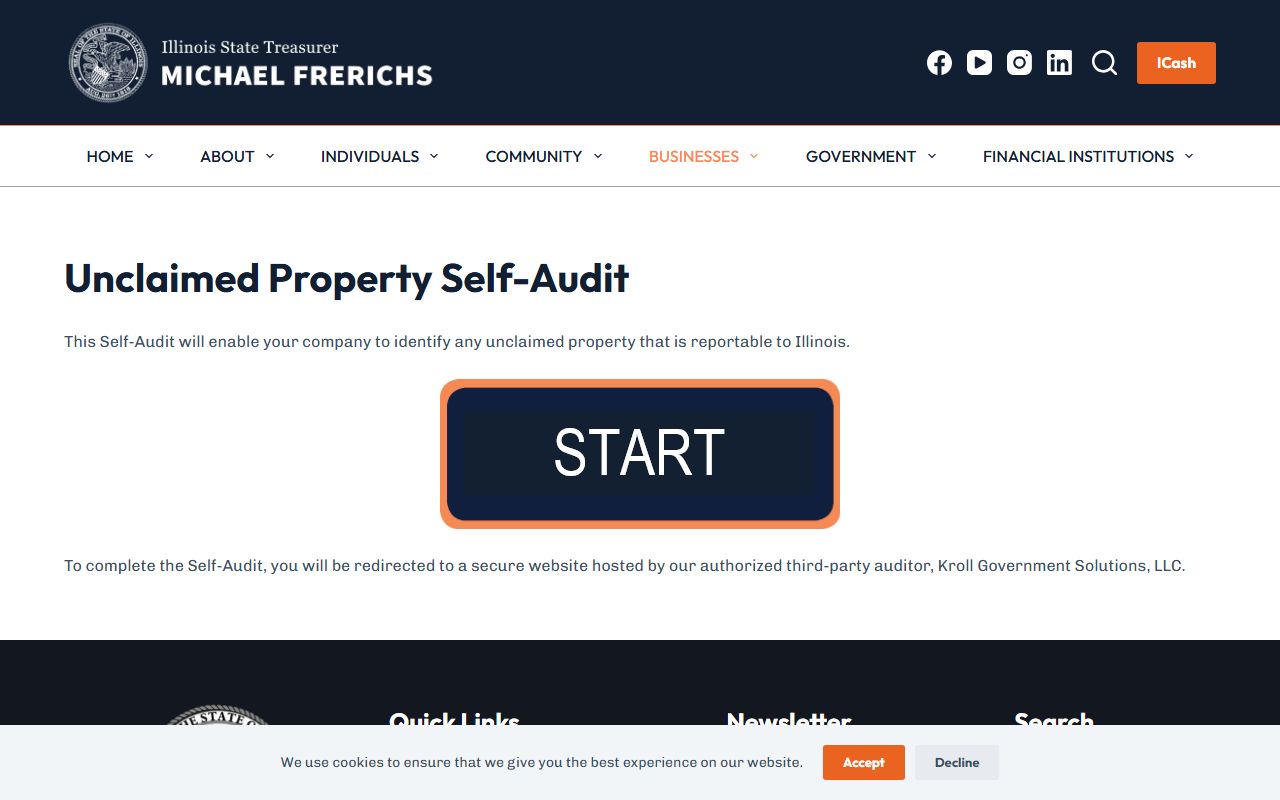
Filing your report each year is the best way to avoid a compliance examination. Even if you have nothing to report, submit a negative report. Make sure your report and payment balance. Give complete owner details. Report all types of unclaimed money you hold. And do your due diligence as required by the Act. These steps keep you on the right side of the law in Illinois.
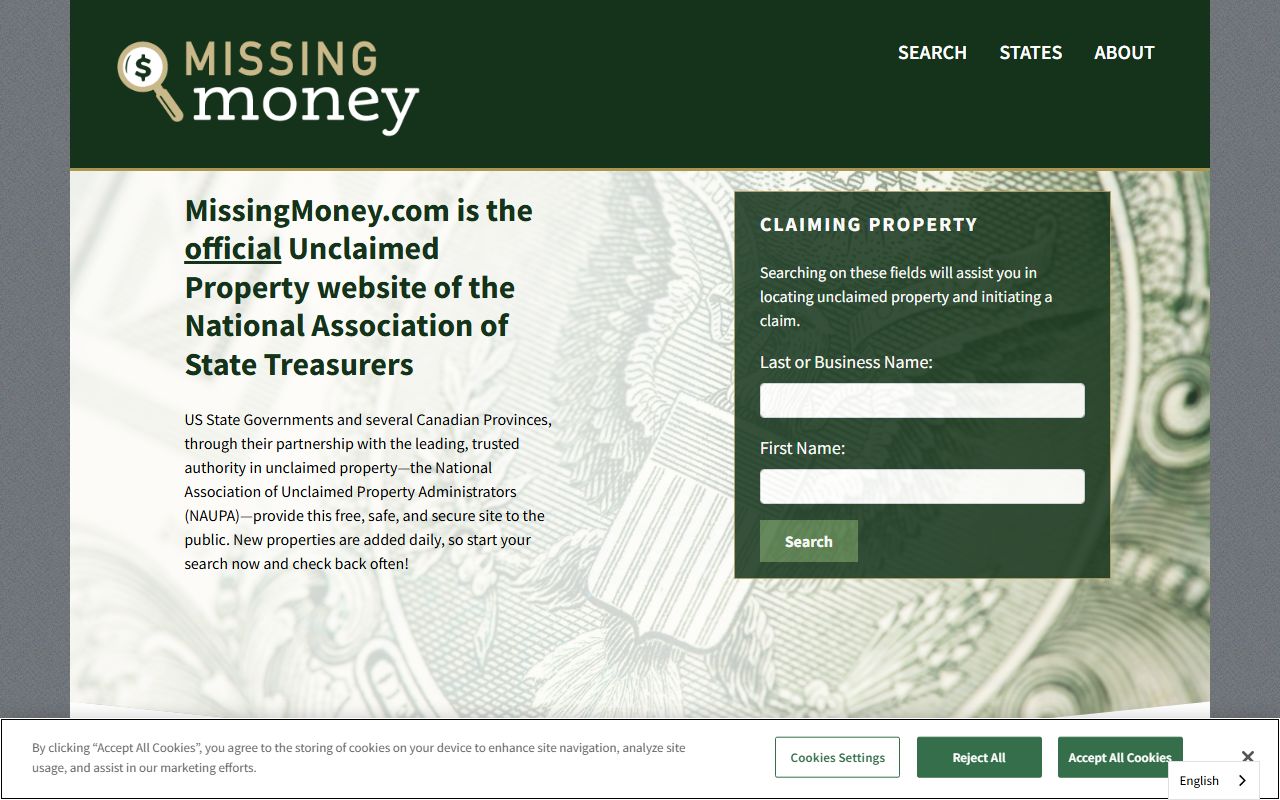
You might also have unclaimed money in other states. The national database at MissingMoney.com lets you search across all states at once. It is free to use and run by the National Association of State Treasurers.
What is the ICash Program
ICash is the self-service system where Illinois residents search for their unclaimed money. The name stands for Illinois Cash. The database holds over $5 billion in unclaimed funds. You can search it any time from any device. There is no app to download. Just go to the ICash about page to learn more about how the system works.
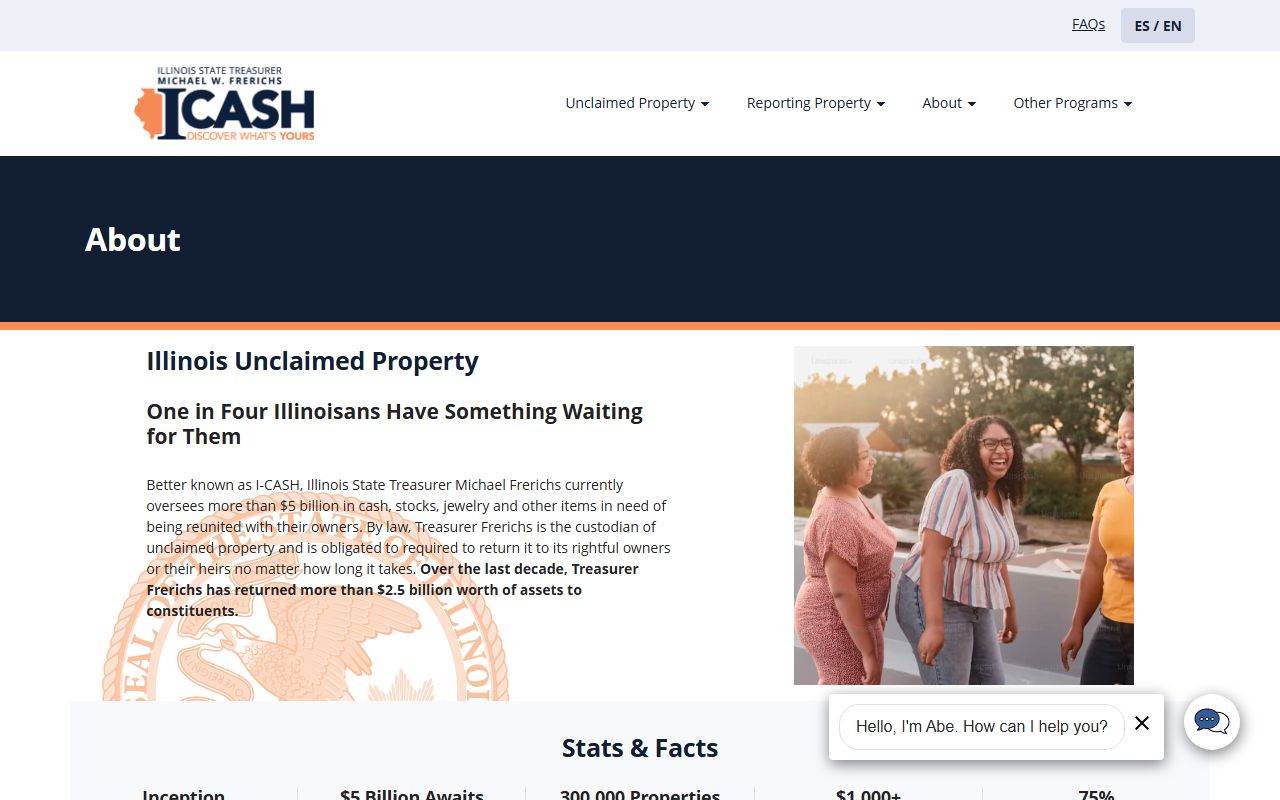
When property stays unclaimed for three to five years, it gets turned over to the Illinois State Treasurer. The Treasurer's office serves as custodian. They do not spend it. The unclaimed money sits there until someone claims it. Property is returned at no cost with the proper identification. That is the whole point of the ICash program.
Browse Illinois Unclaimed Money by County
Each county in Illinois has its own treasurer and clerk offices. Some counties run their own unclaimed money programs for items like uncashed checks and trust funds. Pick a county below to find local info and resources.
Unclaimed Money in Major Illinois Cities
Residents of major cities search for unclaimed money through the state ICash system. No city in Illinois runs its own unclaimed money database. Pick a city below to find local offices and resources that can help.